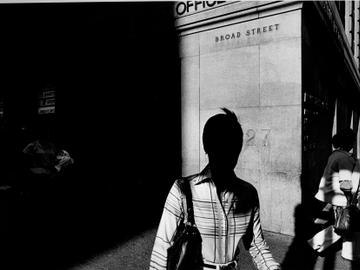
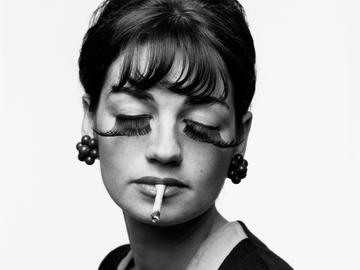
Fondation A Stichting will soon welcome What’s the Word? Johannesburg!, an exhibition dedicated to a new generation of photographers from the South African metropolis.
©
Alice Mann
Also in:
en
nl
fr
Not the Johannesburg of fairs and of the international art industry, which often showcases the same stars (Zanele Muholi, David Goldblatt, Mikhael Subotzky, etc.), explains Emilie Démon, the curator of the exhibition who manages the Afronova Gallery, a visionary space located in one the most vibrant neighbourhoods in the city. This time, another Johannesburg is on display: that of photographers of the peripheries, rendering the city with all the brute force of their feelings about it. A city in which, just thirty years ago, Black people could not travel around without a pass.
The school in the school
Of the nine artists exhibited, six discovered photography from the “Of Soul and Joy” project managed by, among others, Emilie Démon, who plays the role of mentor there. Run out of a classroom in a secondary school in the township of Thokoza, which is shaped by the violence and crime passed down from history, the programme is free and open to all. “It is the most hardworking who stay,” says the French-Japanese gallerist who swapped Tokyo for Johannesburg eighteen years ago: “I left one of the safest cities in the world for one of the most dangerous.”
“During apartheid, photography was used to speak out against racial segregation and the regime. After 1994, artists were eager to show their country to the world. Today, they are moving away from the purely documentary”
Not all the artists attended this programme, but they all belong to a generation that is exploring its personal history in order to understand its connection with the collective memory. Most of the photographers, born after 1994, are part of the so-called “born free” generation, though, as Emilie Démon points out, that freedom remains relative given the persistent socio-economic segregation. “During apartheid, photography was used to speak out against racial segregation and the regime. After 1994, artists were eager to show their country to the world. Today, they are moving away from the purely documentary to explore global issues: gender, violence against women, transgenerational transmission of trauma,” notes Démon.
A history of violence
Vuyo Mabheka combines childhood memories and collages which deal with paternal absence and armed violence. Zwelibanzi Zwane, bullied in his youth, searches for peace in Tarkovskian landscapes steeped in melancholy. Sibusiso Bheka captures Thokoza by twilight, filled with mystery and surrealism. Dimakatso Mathopa reinterprets the codes of colonial photography in cyanotypes, drawing inspiration from her grandmother’s story of forced relocation, an experience shared by many other black South Africans. Motlhoki Nono shows black women frozen just before a kiss, interrogating their absence from love stories in the media.
Jabulani Dhlamini evokes the Sharpeville massacre, a terrible act of police repression that occurred on 21 March 1960, through simple everyday scenes. Alice Mann celebrates the culture of majorettes, known as “drummies”, an empowering sport for some young girls from marginalised communities. Xolani Ngubeni presents an experience of fatherhood as seen from the inside, full of fragility and profound love for his daughter. And Thembinkosi Hlatshwayo transforms his family’s tavern Slaghuis (literally “abattoir” in Afrikaans), once marred by violence, into a space charged with memories.
Five of the artists will make the journey to Brussels for the exhibition, the title of which, What’s the Word? Johannesburg!, is borrowed from a song by Gil Scott-Heron and Brian Jackson (1975), written during apartheid. That song’s spirit of resistance still resonates in the work of the nine photographers, who offer a never-before-seen perspective on Johannesburg, conscious that, to fully access freedom, one must first confront the ghosts of the past.
Gallery

©
Alice Mann

©
VUYO MABHEKA: SKOROKORO, 2023 – COURTESY AFRONOVA GALLERY

©
©Afronova Gallery-Dimakatso Mathopa-Individual Beings Relocated IV, 2017, Cyanotype print on Fabriano Artistico cotton paper

©
Zwelibanzi Zwane-Milky Way, 2023

©
Thembinkosi Hlatshwayo-Slaghuis, 2018

©
Afronova Gallery-Nono Motlhoki-Dahlia, 2023

©
Sibusiso Bheka-teddybear2015
Read more about: Expo , Johannesburg , Zuid-Afrika , fotographie , fondation A Stichting